
1. 概要
レンチウイルスベクターは、レトロウイルス科レンチウイルス属に由来する遺伝子導入システムであり、分裂細胞・非分裂細胞の双方に対して高効率な遺伝子導入が可能な点から、基礎研究および応用研究で広く利用されている。
蛍光色素と称されることもあるが、細胞生物学およびウイルスベクター工学の分野では、蛍光タンパク質(Fluorescent Protein)をウイルスベクターの発現カセットに組み込み、感染細胞の可視化・定量解析を行う手法が標準的である。
2. 蛍光標識レンチウイルスの構築
レンチウイルスベクターへの蛍光タンパク質導入は、以下の手順によって行われる。
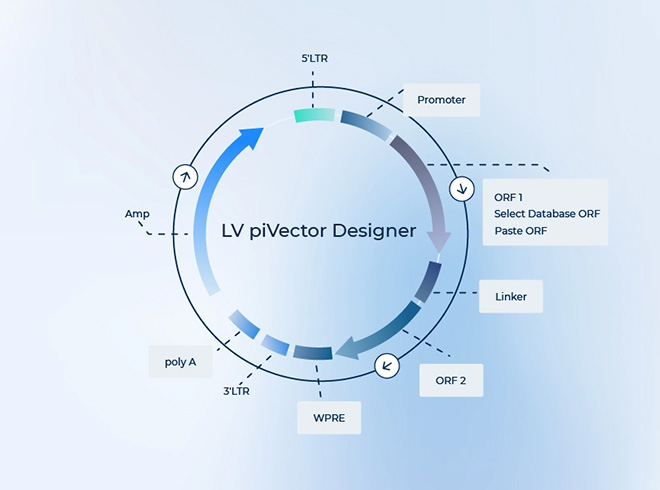
(1) トランスファープラスミドの設計
-
蛍光タンパク質遺伝子(例:EGFP、mCherry、mTagBFP、ZsGreen など)を発現カセットに挿入。
-
発現制御には、CMV、EF1α、SFFVなどの強力プロモーター、または細胞種特異的プロモーターを選択可能。
(2) パッケージングシステム
一般的には 3プラスミド方式(Third-generation lentiviral system) を使用する。
-
Transfer plasmid(目的遺伝子+蛍光タンパク質)
-
Packaging plasmid(Gag-Pol、Rev)
-
Envelope plasmid(VSV-G 等の外被タンパク質)
これらを HEK293T 系細胞に共トランスフェクションすることで、蛍光標識レンチウイルス粒子を産生する。
3. 感染細胞の評価
-
蛍光顕微鏡観察により導入効率や発現レベルを可視化。
-
フローサイトメトリー(FACS) によって、陽性細胞の割合や蛍光強度を定量的に評価可能。
-
蛍光強度の安定性や折りたたみ効率に関して、EGFP・mCherry等は実績が豊富。
4. 技術的注意点
-
大型遺伝子挿入はウイルス収量やパッケージング効率を低下させる可能性がある。
-
蛍光タンパク質の過剰発現は、細胞ストレスや表現型への干渉を引き起こす場合がある。
-
多色解析を行う場合、励起波長・発光スペクトルのオーバーラップに留意し、適切な蛍光タンパク質の組み合わせを選択する必要がある。
PackGeneについて
PackGene Biotech is a world-leading CRO and CDMO, excelling in AAV vectors, mRNA, plasmid DNA, and lentiviral vector solutions. Our comprehensive offerings span from vector design and construction to AAV, lentivirus, and mRNA services. With a sharp focus on early-stage drug discovery, preclinical development, and cell and gene therapy trials, we deliver cost-effective, dependable, and scalable production solutions. Leveraging our groundbreaking π-alpha 293 AAV high-yield platform, we amplify AAV production by up to 10-fold, yielding up to 1e+17vg per batch to meet diverse commercial and clinical project needs. Moreover, our tailored mRNA and LNP products and services cater to every stage of drug and vaccine development, from research to GMP production, providing a seamless, end-to-end solution.